The development of artificial intelligence (AI), machine learning (ML), and other advanced technologies has accelerated the growth of workflow automation. These innovations are changing what people do at work, how responsibilities are distributed, and which skills companies value most. In this article, we explore how AI is changing the job market, which roles are becoming more important in 2026, why soft skills matter more than ever, and how professionals can stay competitive as automation spreads.
From Routine Tasks to Strategic Oversight
In recent years, automation has become a much stronger force in the labor market. One of the most significant consequences has been the reduction in the number of jobs requiring monotonous, repetitive manual tasks.
The implementation of AI technologies, robotics, and other forms of business automation has increased the speed and productivity of many processes. For example, robots and automated equipment perform a range of tasks in various manufacturing environments, including assembly, packaging, and quality control, much faster and with greater precision.
Automation is increasingly replacing not only physical human labor but also routine office work. The impact of its implementation has become particularly noticeable in the areas of administration and service, where AI systems excel at data entry and processing, document preparation and analysis, customer support, and a range of other operations.
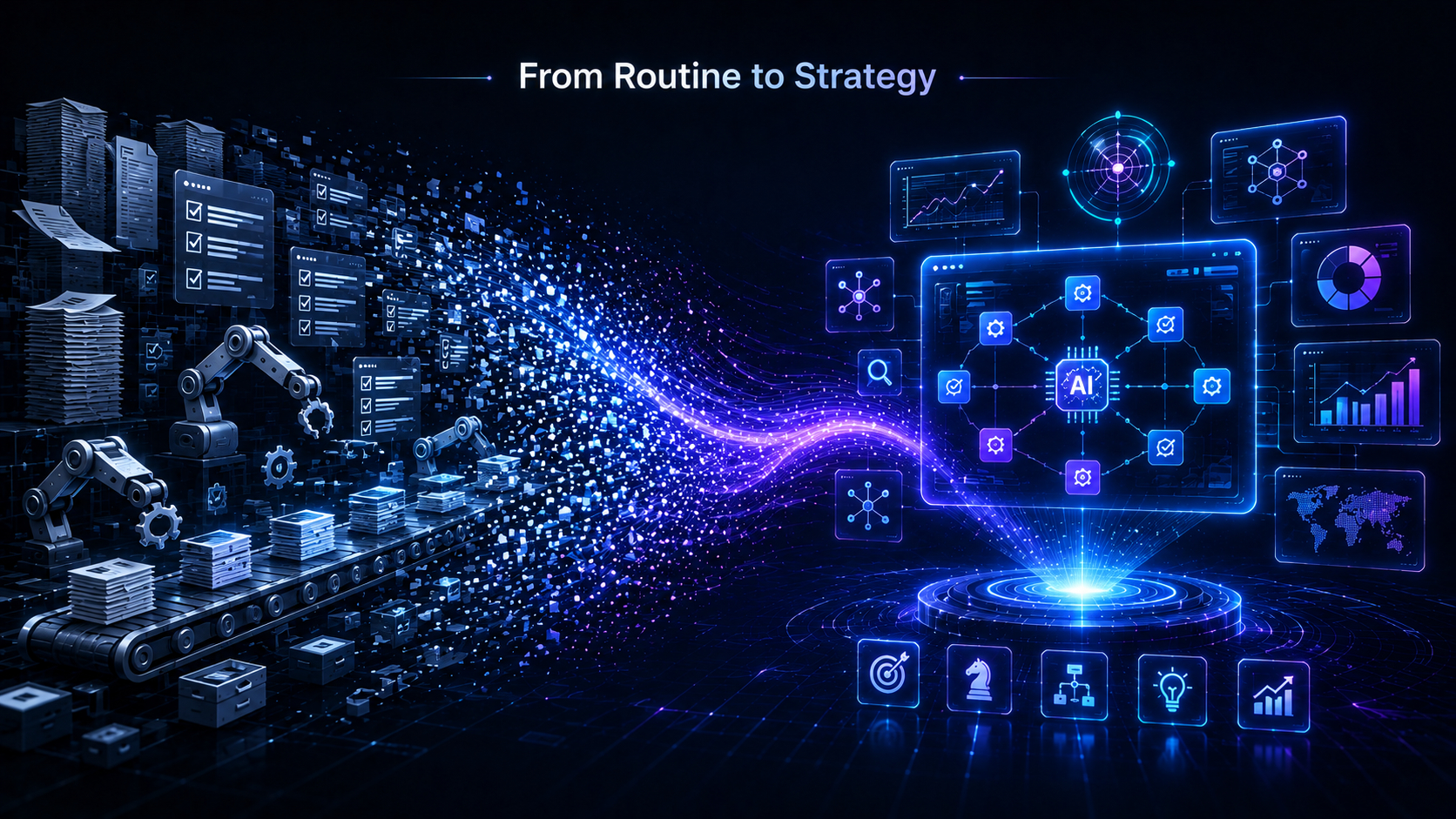
These changes have resulted in a significant reassessment of traditional job responsibilities and professional skill requirements. Automation frees people from monotonous, mechanical work, allowing them to focus on more important tasks that require creativity, emotional intelligence, and other soft skills.
According to Boston Consulting Group, within the next two to three years, 50% to 55% of jobs in the US could be reshaped by AI. This refers specifically to the transformation of tasks and skill requirements, not the disappearance of the positions themselves.
Entry-level roles may face particular pressure, especially when routine tasks that once helped newcomers gain experience are increasingly automated. This means that reskilling and upskilling strategies are especially critical for specialists just starting their careers.
Thus, the need for continuous professional development is growing. The widespread adoption of automation stimulates adaptive professional development, encouraging employees to master new skills, solve more complex problems, and increase their value in the labor market.
Automation is driving three fundamental shifts in how work is performed:
- From routine execution to creative solutions. Instead of preparing repetitive reports or sending identical responses to customer questions, specialists are focused on developing new products, implementing innovations, optimizing processes, and improving customer service.
- From task execution to accountability for outcomes. Automation shifts the focus of employee responsibility, giving them greater freedom of action. This makes their roles more cross-functional and strategic.
- From limited actions to orchestration. This shift gives employees new responsibilities related to orchestrating and coordinating work. These include setting up automation tools, training AI algorithms, monitoring performance, solving non-standard problems, etc.
The Rise of Hybrid Roles and Human-AI Collaboration
One of the key consequences of automation's impact on job roles is the increasing interaction between humans and artificial intelligence and the emergence of so-called hybrid roles in the labor market. These are professions and positions where the strategic thinking, ethics, empathy, creativity, contextual understanding, and social skills of humans are combined with the speed, accuracy, scalability, and analytical and predictive capabilities of AI.
In many companies, teams, and other work environments, AI and ML technologies perform some of employees' tasks by acting as virtual assistants. This allows for the rational distribution of work responsibilities to improve productivity.
The most effective hybrid work models leverage the strengths of humans and AI: technology handles data processing, automation of routine tasks, and decision support, while humans focus on tasks that require critical thinking, creativity, and contextual understanding.
Examples of human-AI collaboration in various fields:
- The marketer generates advertising campaign options using AI, then manually refines and adapts them to the brand's tone.
- The doctor reviews AI-assisted diagnostic results, then personally makes a diagnosis and prescribes treatment.
- The developer uses AI to write individual code fragments and then independently creates the program architecture based on them.
Every year, more hybrid job roles are appearing in the labor market. They are most often found in management, analytics, marketing, content creation, HR, operations management, as well as IT and data science. Here are just a few:
- AI-enabled product manager. This specialist leverages artificial intelligence to analyze user behavior, develop product roadmaps, and set priorities.
- AI-enabled business analyst. This specialist combines traditional data analysis and modeling with AI-powered forecasting.
- AI content strategist. This position manages AI-powered content generation, adapting materials to the brand's tone and ensuring narratives align with its mission and values.
- AI workflow architect. This specialist designs, implements, and monitors reliable, repeatable AI-powered workflows, from assigning tasks to AI agents to verifying the quality of the results.
- AI-enabled operations manager. A qualified employee uses AI algorithms for demand planning, logistics, and process optimization.
- AI-enabled HR specialist. This role uses artificial intelligence to support candidate screening, improve job matching, and identify relevant applicants, while keeping human oversight in place to reduce the risk of bias.
It's important to understand that the benefits of this transformation are unevenly distributed. According to a 2026 PwC study, automation is creating a "dual-track" labor market.
Roles where AI handles routine tasks while human expertise and judgment become more valuable are growing twice as fast in job openings and have seen 42% faster wage growth since 2021 than roles where AI mainly simplifies work for non-specialists. This means that not all hybridization is equally beneficial to the employee. The key is whether AI enhances your expertise or replaces it.
The Human Premium: Soft Skills as the New Hard Skills
As workplaces become more digital, soft skills that were often undervalued in the past are becoming more important in the labor market. These skills are directly linked to emotional intelligence (EQ) — a person's ability to recognize and manage their own emotions, as well as to understand and respond appropriately to the emotions of others.
As automation spreads, soft skills become especially valuable. They help employees effectively interact with others, make decisions, and adapt to change. Let's look at the key skills that will be especially in demand in the labor market of the future.
Communication
Strong communication relies on well-developed verbal and nonverbal skills, active listening, persuasion, and the ability to defend one's position, find common ground with others, and resolve conflicts. Communication skills are extremely important for any occupation that requires social interaction, making them a top priority for the workforce of the future.
Empathy
Empathy helps you understand other people's feelings and put yourself in their shoes. It also allows you to assess a situation from another's perspective, even if it doesn't align with your own or contradicts it.
Developing empathy requires learning to recognize the emotions of others and respond to them appropriately. By identifying someone's emotional state, you can use this information for productive social interaction.
Creativity
Creativity is becoming one of the essential soft skills for the future, as it helps people think outside the box, find original solutions, and propose new approaches to various situations and problems. Traditionally, this skill was associated primarily with creative professions, but as digital tools become part of more workflows, creative thinking will be useful for many other professionals as well.
Critical thinking
Critical thinking is especially valuable in a digital workplace. It helps people quickly find, evaluate, and process relevant information, assess source credibility, verify facts, analyze information, and find connections between facts. Developed critical thinking helps people effectively apply acquired knowledge, draw the right conclusions, and make sound decisions.
Adaptability and self-organization
Adaptability is a key soft skill. It allows employees to quickly and seamlessly adapt to new circumstances, conditions, and labor market demands, and to acquire new knowledge and skills to remain competitive.
Adaptability helps people leverage their strengths, avoid dwelling on problems and failures, and find new ways to succeed. Self-organization, in turn, enables effective workload management, time management, and productive work without constant supervision.
The Lifelong Learning Paradigm and Reskilling
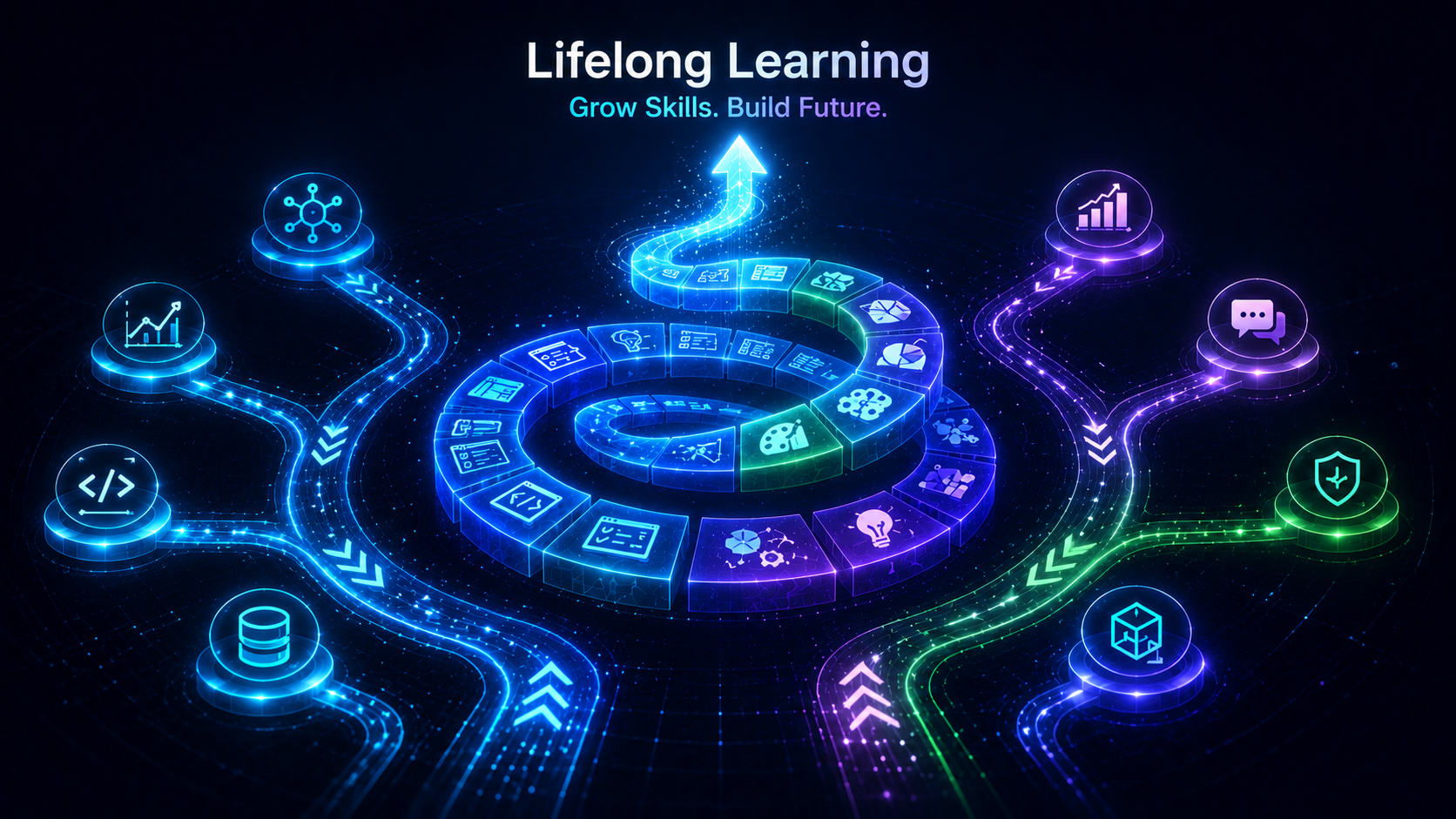
Continuous learning, professional development, reskilling, and upskilling are key factors for career longevity in the AI era. To remain competitive in the market, specialists need to continually learn and develop — especially in areas related to technology, data, and digitalization.
The concept of lifelong learning aims to maintain professional relevance in the face of the widespread use of artificial intelligence and automation. It requires workers to acquire new knowledge and skills throughout their entire working career, not just during formal education.
Technological advancements are rapidly making previously acquired knowledge and skills obsolete. Many of them become irrelevant within just a few years. Some professions are becoming obsolete, while others are rapidly evolving — job responsibilities, fields of work, and tools used are changing.
As a result, a worker's career becomes nonlinear. People are forced to repeatedly change roles, industries, and even professions during their working lives.
In an era of rapid technological progress and widespread automation, retraining, reskilling, and upskilling strategies are becoming critical for success in the labor market:
- Upskilling. Improving skills allows workers to keep pace with technological advancements, industry trends, and changing labor market demands within their industry. Upskilling often involves not only improving existing skills but also expanding them by acquiring additional knowledge and skills.
- Reskilling. In some cases, employees are required to master a fundamentally new set of skills, often followed by a transition to a different job role or a radical change of profession. Reskilling improves employability, supports career mobility, and helps workers adapt to changing labor market demands.
- Retraining. During this process, employees refine their existing skills or acquire new ones while remaining in their current role or transitioning to a closely related one. Retraining enables them to stay effective in their current position or profession and generally requires less time and effort than reskilling.
Final Thoughts
The widespread adoption of AI technologies and automation tools by businesses is fundamentally changing the global labor market. To remain competitive, workers will need to adapt to these changes.
In 2026, the future of work is being shaped by several clear trends. One of these is the shift in human roles: people are increasingly delegating routine work to AI while taking on supervisory and decision-making responsibilities. This will be accompanied by a transformation of existing professions and the emergence of new activities based on collaboration between humans and their virtual AI assistants.
Another important labor market trend is the growing demand for soft skills, which AI still cannot fully replicate. Developing these human-centered skills, combined with ongoing training and retraining, will be important for career growth in the age of widespread business automation.
Working with leads? We suggest you try simple but effective automation right now. It doesn't require retraining or upskilling. Check out the step-by-step guides below:
- How to Connect Facebook Lead Ads to Instasent Without Coding
- Google Lead Form and Asana Integration: Automatic Data Transfer
- How to Connect TikTok to Brevo: A Seamless Integration Guide
- Google Lead Form and Monday.com Integration: How-to Guide
- How to Integrate TikTok with GetResponse: Step-by-Step Guide