Customer segmentation is a key marketing technique. It helps improve targeting and the effectiveness of a brand’s engagement with its audience. It can increase campaign conversion rates and return on investment (ROI). In this article, you'll learn about the main types of audience segmentation used in modern marketing and the criteria behind them. Our comparison of value-based vs. behavioral vs. demographic segmentation will help you determine the most appropriate type for optimizing your marketing strategies.
Behavioral Segmentation: How Customers Actually Act
Customer segmentation involves dividing customers into groups based on how they interact with a brand, its products, or the purchasing process. By collecting and analyzing information about customer behavior, companies can better predict customers’ future actions, intentions, and level of loyalty in subsequent interactions with the company.
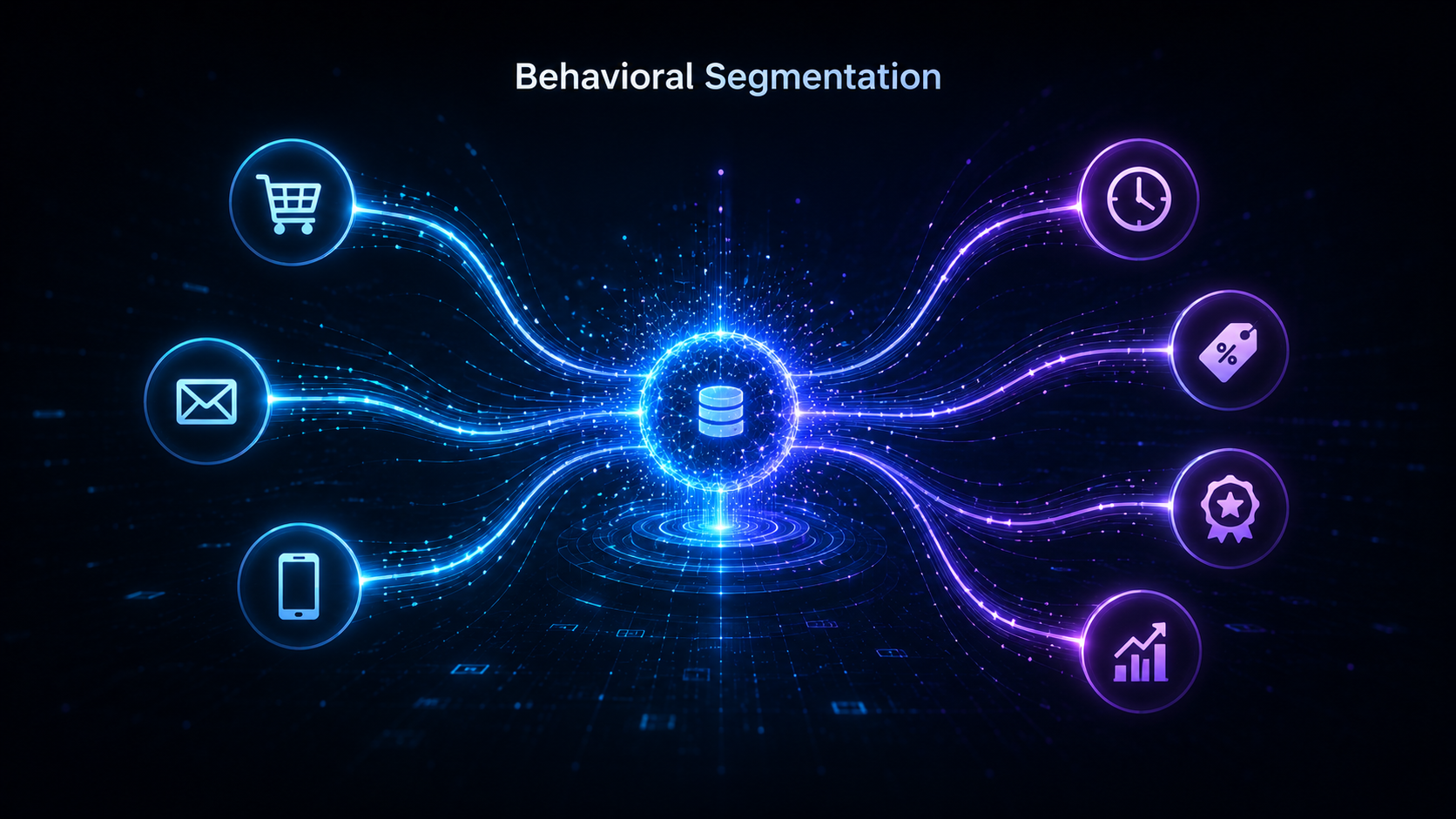
Behavioral data allows marketers to evaluate an audience based not only on actual purchases but also on customers’ interactions with the brand at different stages of the customer journey. This is done using several criteria that reflect motives, habits, and consumer behavior patterns.
Purchase behavior
Purchase-based segmentation identifies patterns in how customers buy goods and services. These include purchase frequency, average order value (AOV), customer journey stages, time since the last order, whether customers buy at full price or with discounts, and other purchasing trends.
Time and occasion
Historical data on when and in what context customers interact with a brand helps identify behavioral patterns and trends. Using this criterion, marketers group customers based on the time of day or day of the week when they most often make purchases.
Marketers also track the reasons that prompt customers to contact the company or make a purchase. For example, these may include major holidays (such as Christmas and New Year), important events (birthday, wedding), or contextual triggers (work, travel, etc.).
Benefits sought
Behavioral segmentation also examines the specific benefits customers seek from a brand or product. Marketers consider factors such as the customer problems a product helps solve, as well as convenience, ease of use, price, quality, functionality, innovation, and status.
Loyalty
A behavioral audience segmentation strategy groups customers based on historical data about their interactions with the brand and its products (purchase history, engagement level, etc.). Loyalty-based segmentation helps identify the most loyal customers and understand their purchasing habits and needs. The resulting insights help develop or adjust marketing strategies to retain and increase engagement with loyal customers.
Demographic Segmentation: Who Your Customers Are
Demographic audience segmentation uses a fundamentally different set of criteria. These are based not on behavior but on common, measurable customer characteristics.
The most common demographic variables used in marketing include age, gender, location, occupation, education, income level, marital status, and ethnicity. Each of these variables helps marketers view the audience from a different perspective and identify significant differences between consumer groups.
Demographic segmentation allows companies to better tailor their products, marketing strategies, or campaigns to the various groups within their target audience. It allows businesses to effectively personalize customer communications, strengthening relationships and improving service quality.
The main demographic segmentation criteria are as follows:
- Age. Consumers’ needs, values, and behavior largely depend on their age group. Taking this into account, brands can more accurately tailor their products and messages to their key target groups.
- Gender. Different gender groups may have different needs, interests, and consumer preferences. Understanding these differences helps marketers tailor campaigns and messaging to specific audience segments.
- Income level. Consumers' economic status directly influences their brand selection and purchasing decisions.
- Education and profession. This customer data analysis criterion is no less important for customer segmentation. A customer’s education level and occupation largely shape their preferences, receptivity to information, and communication style.
- Marital status. The presence or absence of a partner and children is a significant factor that determines a consumer's lifestyle, needs, and purchasing habits. For example, single consumers may be more interested in travel and entertainment, while married consumers may be more likely to purchase family-oriented goods and services.
Value-Based Segmentation: Who Brings the Most Value
Value-based segmentation groups customers according to the economic value they bring to a business. The goal of this approach is to identify the most valuable customers and engage them through personalized communications (messages, offers). This strengthens their loyalty and encourages repeat purchases.

- Automate the work with leads from the Facebook advertising account
- Empower with integrations and instant transfer of leads
- Don't spend money on developers or integrators
- Save time by automating routine tasks
To effectively segment customers based on their value, marketers collect and analyze various data about their interactions with the brand and product. The most important data points include purchase history, purchase frequency, average order value, and engagement metrics.
Customer lifetime value (LTV)
Customer lifetime value (LTV) estimates the total value a business can expect from a customer or customer segment over the entire relationship. It is commonly used to identify high-value customers and guide long-term marketing investments. LTV-based segmentation is effective for identifying the most valuable customers and prioritizing marketing, retention, and customer success efforts.
Engagement
Frequently opening and reading email newsletters, visiting the website or mobile app, completing surveys, and contacting support all indicate a high level of customer engagement. Even if the current LTV metrics of a particular audience segment are not very high, their engagement indicates interest in the brand or product and a greater receptiveness to personalized offers and messages. Consequently, such customers are potentially highly valuable to the company and require a special approach.
Purchase history and frequency
For successful value-based customer segmentation, tracking purchase history and frequency is helpful. This metric is often used when developing personalized marketing campaigns. By studying it, marketers focus on customers who purchase regularly and frequently. Such customers are generally considered more loyal and more valuable to the business.
Referral potential
In many cases, highly engaged customers also have strong referral potential, making them valuable advocates for a brand. This means they are more likely to leave positive reviews about the brand and product, actively engage with social media content, and recommend the company to their friends.
Comparing Segmentation Models: When and Why to Use Each
According to McKinsey, detailed behavioral and value-based segmentation can improve the effectiveness of targeted offers. In documented use cases, companies implementing this approach have reported sales increases of 1–2% and margin improvements of 1–3%.
To effectively apply customer segmentation models, it’s necessary to first analyze the business goals, resources, and constraints associated with each model. Behavioral, demographic, and value-based segmentation are far from the only types of segmentation, although they are the most common. Choosing the right method for a specific company largely depends on the volume and quality of its existing customer data.
First, it’s important to understand which data analysis tools and techniques are available to the business. For example, when evaluating quantitative data, such as purchase frequency or average order value, statistical methods such as cluster analysis and factor analysis can be highly effective. Meanwhile, qualitative research methods, such as surveys, interviews, reviews, and focus groups, provide valuable insights into the target audience’s needs, preferences, and behavior.
It’s also useful to evaluate which segmentation models best support your marketing strategy through A/B or multivariate testing. Once you've chosen the optimal segmentation approach, it's important to continually test and refine that model to more accurately adapt it to current marketing strategies, new products, changing market conditions, and customer needs.
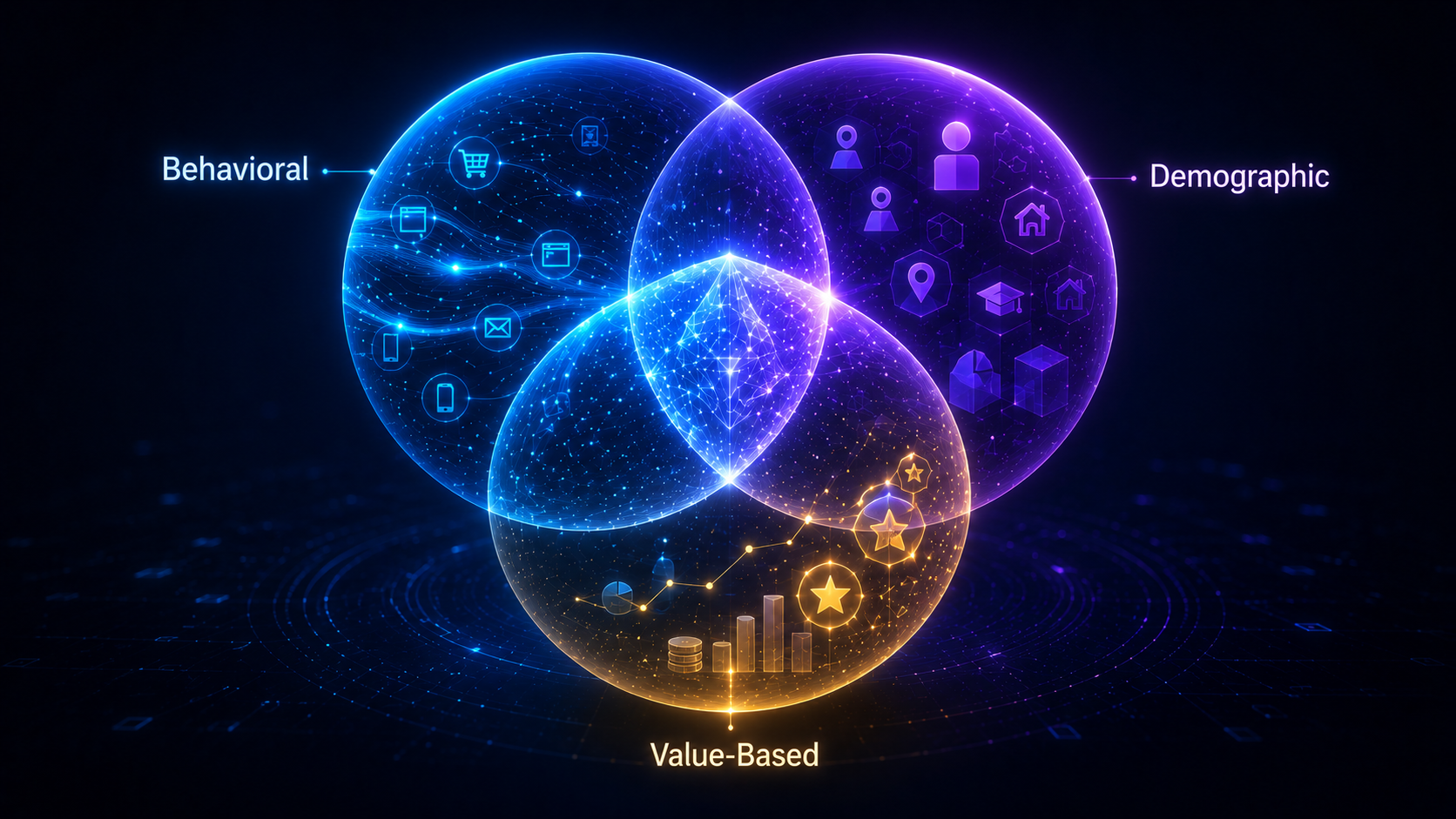
A single segmentation model may not fully reflect the diversity of your customer base or address all of your business goals. In this case, it's worth trying to combine multiple types of customer segmentation to achieve a more accurate and detailed analysis of relevant target audience segments.
To implement a hybrid approach, you first need to collect as much detailed customer data as possible and organize it according to customer profiles and interaction history. Next, compare the available information against the key criteria of each segmentation model to identify distinct segments based on the differences revealed in the data.
By integrating behavioral data with demographic and value-based insights, marketers can build a more complete view of each target segment. As a result, you can successfully apply these insights to personalize communications and tailor your marketing strategies.
Final Thoughts
When applied in line with business goals and audience characteristics, marketing segmentation strategies can significantly improve marketing effectiveness. The techniques presented in this article help marketers group and differentiate customers using the criteria most relevant to each segment.
To improve the speed and productivity of segmentation, it's important to use the right toolset. Modern CRM and marketing platforms with built-in AI models and powerful analytics capabilities help automate these processes and accurately segment large customer bases according to business-defined criteria.
Customer segmentation becomes even more effective when customer data flows automatically between your marketing tools. If you're looking for practical ways to automate these processes, these step-by-step integration guides are a great place to start: