
Traditional marketing funnels are insufficient to fully capture the complex customer journey. Consumers no longer want to interact with brands according to predefined templates set by marketers. Linear models have given way to nonlinear concepts. In this article, we'll explore one of the most well-known of these — the Flywheel model. Here, you'll learn what this model is, how it works, and what metrics are used to evaluate its effectiveness. You'll also learn about business examples of its application, as well as the key tools and technologies used to implement this strategy.
The End of the Funnel Era: Why Linear Models No Longer Work
For a long time, the basis of most marketing strategies was the funnel, consisting of the standard stages of the customer journey: attention, interest, decision, action. However, today this model has become ineffective, as consumer behavior and expectations have changed significantly.
The customer journey in 2026 will increasingly be nonlinear. Modern customers no longer want to move in a straight line, sequentially progressing through all the stages of the marketing funnel that lead them to a purchase. Their actions have moved beyond frameworks and templates defined by marketers. They can enter and exit the funnel at any stage, skip certain actions, or linger at any stage for an indefinite period.
Today's audiences have become significantly more selective when it comes to marketing messages. They expect relevant, useful, and personalized content and increasingly ignore formulaic or intrusive advertising. Today's consumers navigate their own journeys — researching product or service information from third-party sources, comparing prices across different platforms, seeking unbiased reviews, and engaging with brands through multiple touchpoints.
The customer's path to purchase has become much more complex and unpredictable, and marketers can no longer fully manage and control it. Previously effective means of influence over audiences have now become significantly weaker, requiring businesses to undertake a significant digital transformation of their marketing strategies and approaches.

The once-common "advertisement to sales" model has become significantly more complex, making it more fluid and less formulaic. Today, businesses must be prepared to proactively engage with potential clients through a variety of channels (social media, newsletters, online chats, etc.).
Continuously enhancing the customer experience through engagement and support has proven highly effective in attracting and retaining customers. This is achieved through engaging and relevant content, a friendly community, and high-quality post-purchase service.
Understanding the Flywheel Model: How Momentum Drives Growth
The marketing flywheel is a customer-centric strategy based on continuous interaction between businesses and customers, aimed at ensuring their satisfaction and loyalty. Companies that follow this strategy leverage engagement and improved customer experiences to support sustainable brand growth.
The result of these efforts is a high-quality customer experience that drives repeat sales, positive referrals, and customer growth. This model helps businesses fully meet and even exceed customer expectations, building long-term relationships with them and strengthening market position.
The flywheel strategy consists of a three-stage cycle of interaction between a brand and a customer:
- Attract. In the first stage, companies need to attract the attention of potential customers through engaging and useful content, search engine optimization (SEO/GEO), targeted advertising, social media promotion, and other channels and methods.
- Engagement. Having successfully captured their audience's attention, brands begin to engage and nurture leads to build trust and convert them into customers. To do this, they regularly deliver relevant content, nurture interest with personalized emails, and engage with them through convenient channels.
- Delight. Improving the customer experience will lead to increased customer satisfaction, which will encourage repeat purchases and referrals. At this stage, brands continue to support and inspire their audiences through multichannel communications, loyalty programs, personalized product selection, and other retention strategies.
So, let’s look at the difference between a sales funnel vs. flywheel. A funnel is a linear model focused solely on increasing sales volume. Potential customers are used as a means of increasing a business’s conversion rates, and attention is paid only until the point of purchase.
Unlike a linear funnel, which focuses primarily on acquisition and conversion, the Flywheel model broadens the marketing focus to include retention, loyalty, and referrals. Customers are perceived as the primary drivers of brand growth and development. The effectiveness of the strategy is measured by loyalty/retention metrics and the quality of the customer experience, rather than sales volume and conversion rates.
From Marketing to Experience: Building Continuous Relationships
The spread of the Flywheel model signals a significant transformation in the goals and objectives of modern marketing. Successful companies have shifted their focus from closing deals to continuous customer engagement and creating a positive experience. This concept is now being actively adopted by many large and well-known companies across various industries.
Amazon
Amazon, the world's largest e-commerce platform, attracts consumers with a wide selection of products and low prices. It then engages them with a convenient checkout process, personalized recommendations, and the benefits of a Prime membership.
Professional customer support, one-day delivery, and easy returns on Amazon encourage repeat purchases. This also encourages customers to leave positive reviews about sellers and the platform.
HubSpot
The B2B platform HubSpot attracts startups and small businesses with affordable pricing and a free plan, as well as an extensive knowledge base and regularly updated blog content. It engages them with a variety of useful tools for CRM, marketing automation, sales and customer service, analytics, and content management.
After testing HubSpot's free features, users choose a suitable plan and actively take advantage of the platform's additional benefits. These include onboarding, training, migration from other CRMs, consulting, courses, certifications, and more.
Tesla



The world's largest electric car manufacturer has almost completely replaced traditional marketing methods with a customer success model. Potential buyers are drawn to Tesla's stylish, high-performance models, equipped with a host of innovative features.
To engage customers, the brand leverages direct sales and showcases the advantages of its cars through test drives and showrooms. Meanwhile, benefits from a referral program and over-the-air software updates increase customer satisfaction and encourage repeat purchases.
Airbnb
The core of the popular rental service's flywheel model is its ratings and reviews system, which fosters mutual trust. Travelers are drawn to its extensive catalog of available accommodations in various countries, while landlords benefit from the convenience of renting out their property.
Airbnb engages users with fast bookings and an equally simple listing process. This is reinforced by various payment options and responsive customer support. The availability of exclusive apartments and homes creates a unique customer experience, encouraging repeat bookings and strengthening the company's positive reputation.
Tools and Technologies Powering the Flywheel
To ensure the smooth and stable operation of a nonlinear customer engagement model, businesses need modern tools that consolidate data, automate communications, and support a unified customer experience across all stages — from acquisition to retention. These tools form the technological foundation of the Flywheel-based modern marketing strategy, enabling continuous audience engagement and transforming the customer experience into sustainable brand growth.
CRM (Customer Relationship Management)
Popular CRMs (HubSpot, Salesforce, Zoho) not only store lead contacts but also integrate and coordinate all relevant processes and data related to marketing, sales, and customer service. Using these systems, companies can effectively implement the aforementioned stages of audience engagement using the Flywheel model (attract, engage, delight), achieving desired results faster.
Marketing Automation and Audience Engagement
These services flexibly automate the preparation and execution of various types and formats of marketing campaigns (email, SMS, push, SMM) necessary for the successful implementation of the engage and delight phases. Using ActiveCampaign, Mailchimp, Ontraport, Adobe Marketo Engage, and similar solutions, businesses can optimize nurturing, segmentation, lead scoring, trigger campaigns, and other marketing processes.
Analytics and Reporting
Analytical platforms (Looker Studio, SEMRush, Adobe Analytics, Tableau) allow you to track performance and other brand growth model metrics at all stages of customer engagement. AI/ML products for predictive analytics are also in high demand. With their help, companies track current trends, forecast periods of demand growth and decline, identify promising audience segments, and determine the best periods for campaigns.
Customer Service and Feedback
Helpdesk services (Zendesk, Freshdesk, Intercom) help businesses serve customers through live chats with AI chatbots, tickets, email, and other communication channels. These services enable brands to flexibly automate key support tasks and processes.
Feedback platforms (Jotform, Typeform, SurveyMonkey, Hotjar, Qualtrics) allow you to effectively measure customer satisfaction using surveys, quizzes, and marketing research. The insights gathered from these tools help businesses identify improvement areas, optimize customer experience, and make data-driven marketing decisions.
Integrations
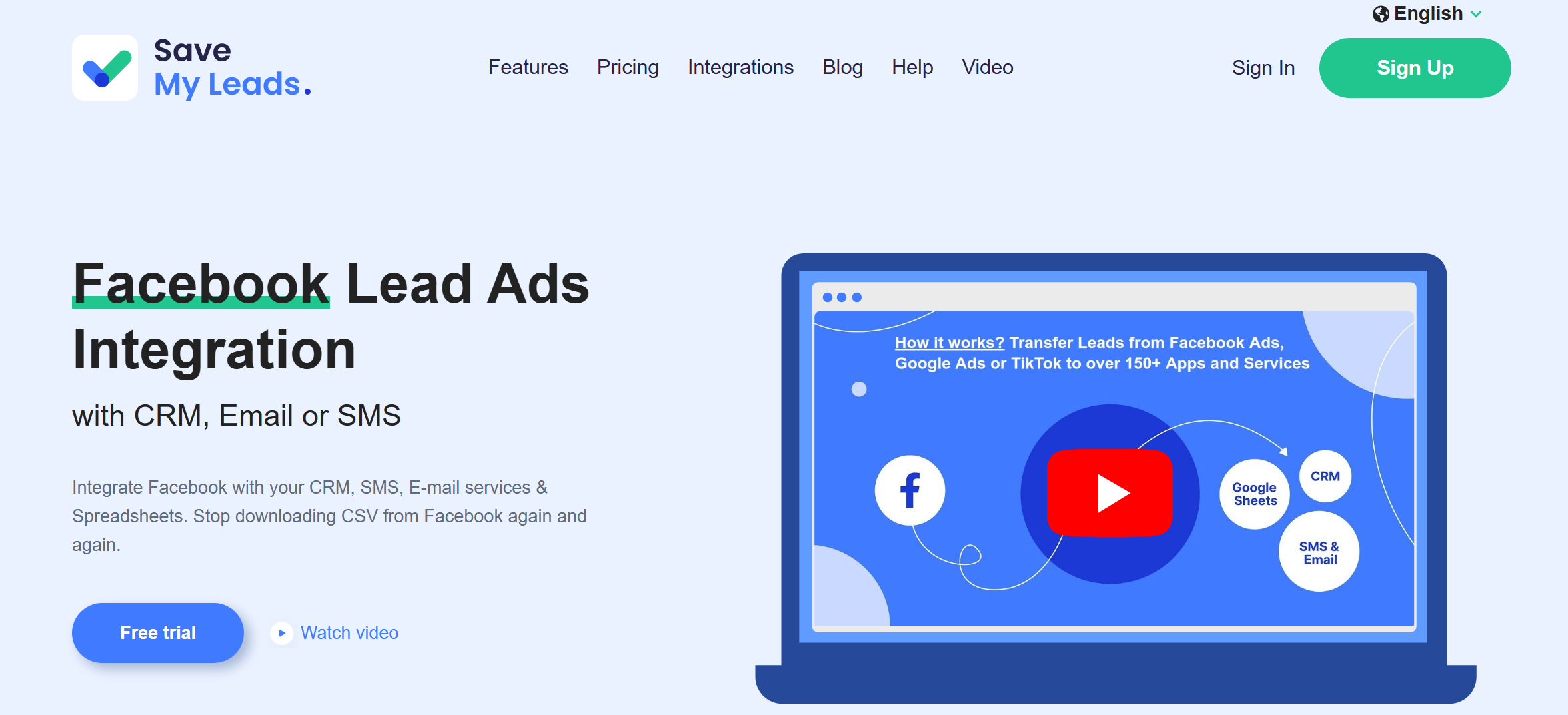
Connector services (such as our platform, SaveMyLeads) allow you to integrate tools and apps (CRM, SMS/email services, ad accounts, etc.), optimizing their operation and integrating them into your workflows. They allow you to connect pre-defined links between different platforms in a no-code manner and customize them without programming skills or specialist involvement.
Measuring Momentum: How to Track Flywheel Performance
The effectiveness of customer experience marketing campaigns cannot be assessed without a clear understanding of how customer experience and audience behavior change over time. Unlike linear models, it's important to track not only the purchase itself but also the dynamics of customer engagement, loyalty, and retention, which reflect the true momentum of a brand's growth.
Key metrics for measuring the effectiveness of the flywheel model in practice:
- NPS (Net Promoter Score). One of the most important metrics in the Flywheel model, it measures the level of customer satisfaction and loyalty. NPS measures the likelihood that customers will recommend a brand, product, or service on a scale of 0 to 10.
- CLV (Customer Lifetime Value). This metric shows the approximate amount of revenue or profit a customer generates for a company over the entire period of their engagement. CLV is important for identifying the most valuable audience segments for a business and improving retention strategies.
- Churn rate. This metric shows the percentage of customers who stopped purchasing a brand's products over a specified period of time. Using this metric, you can track audience churn dynamics and understand how effectively you're implementing the Flywheel model.
- CRR (Customer Retention Rate). This metric is often used to evaluate the effectiveness of a customer retention strategy. It measures how successfully a company retains its customers over a specified period. High CRR values indicate customer satisfaction and contribute to sustainable brand development.
- Referral rate. This metric helps calculate the percentage of customers who actively recommend a brand and its products to others. It shows how effectively a company can promote itself through word-of-mouth.
- Velocity. The speed at which customers move through the attract, engage, and delight stages is a significant factor for a successful Flywheel model. The higher this metric, the more leads are likely to become active customers, and the more revenue they will generate for the company.
Conclusion
The Flywheel framework has confidently displaced low-performing marketing funnels. While the previous focus was on sales volume, it has now shifted to customer satisfaction, loyalty, and retention.
When properly applied, the flywheel model brings businesses more than just short-term profit gains. Its principles ensure sustainable success for modern businesses without major investments in traditional marketing — solely through the active and self-renewing growth of their customer base.
In a highly competitive and complex digital landscape, sustainable growth is increasingly achieved through comprehensive strategies focused on customer experience. The flywheel model is one effective approach for building long-term customer relationships and accelerating organic growth through loyalty and trust.
Don't waste another minute manually transferring leads from Facebook to other systems. SaveMyLeads is a simple and effective tool that will allow you to automate this process so that you don't have to spend time on the routine. Try SaveMyLeads features, make sure that this tool will relieve your employees and after 5 minutes of settings your business will start working faster.