Advances in artificial intelligence are driving a fundamental evolution in physical automation, moving machines from rigid programming to goal-driven execution. Examining robotics trends in 2026 highlights how embodied AI and AI-powered robots are transforming operations across industrial, commercial, and everyday environments.
Industrial Automation and Smart Manufacturing
Robots and embodied AI technologies are changing the way industrial automation is being implemented. They enable machines to perceive their environment, make decisions, and adapt to changing conditions.
A key technological advancement was the development of Vision-Language-Action (VLA) models. They combine visual perception, natural language understanding, and the generation of physical commands for manipulators into a single neural network architecture.
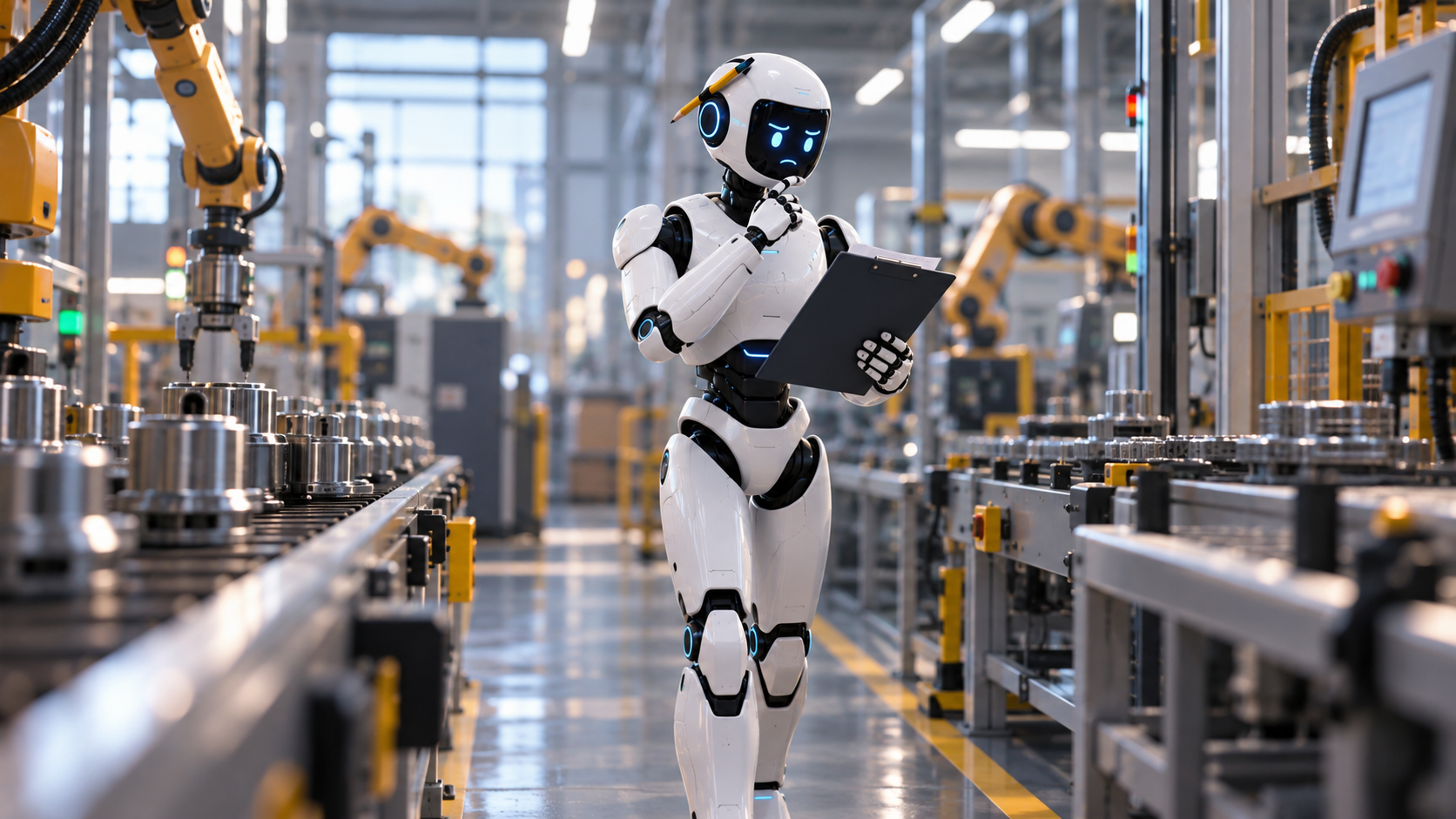
Unlike traditional industrial robotics, these systems operate beyond hardcoded instructions. Powered by multimodal models, autonomous robots perceive dynamic environments, process real-time sensor data, and execute complex workflows without requiring constant manual re-programming.
The main applications of AI robots in manufacturing include:
- Autonomous task execution. Industrial robotics efficiently handles a wide range of tasks with minimal human intervention, including assembling and packaging goods, machine maintenance, picking and handling objects, transporting materials, welding, painting, and more.
- Computer vision and VLA models. Using multimodal VLA architectures and multispectral sensors, AI robots not only recognize objects but are also capable of manipulating unfamiliar objects without requiring their shapes to be explicitly programmed.
- Interacting with people. Collaborative robots (cobots) are used for productive and safe interaction with people in shared workspaces. They feature simple control interfaces, force and proximity sensors, and other safety features.
- Diagnostics and maintenance. AI systems provide comprehensive diagnostics of industrial equipment, including thermal monitoring, anomaly and potential fault detection, and maintenance planning.
- Transportation and logistics. The mobility of autonomous mobile robots (AMRs) allows them to be used for transporting goods and materials within factory floors, as well as for warehouse logistics. AI models help them dynamically plan routes, recognize and avoid obstacles, perform simultaneous localization and mapping (SLAM), and coordinate their movements.
- Integration into the smart manufacturing ecosystem. AI robots easily integrate with a range of modern manufacturing technologies, becoming a key component of the Industry 4.0 ecosystem. They effectively utilize IoT sensors, 5G connectivity, cloud analytics, MES/ERP systems, and industrial data platforms.
Autonomous Retail and Smart Stores
Commercial retail is rapidly adopting smart retail AI to optimize operations and elevate the in-store experience. By integrating computer vision, sensor fusion, and autonomous robots, retailers are transforming traditional brick-and-mortar spaces into self-operating commercial environments.
Key use cases for AI robotics in retail:
- Autonomous stores. AI-powered retail systems use cameras, sensors, RFID, computer vision, and other technologies to monitor merchandise and customer behavior in real time. They automatically identify items on shelves and in shopping carts, interact with customers, process payments, and perform other checkout operations.
- Consulting robots. Mobile and stationary autonomous robots powered by AI communicate with customers and provide them with advice. Their key features include voice interaction, product search, personalized recommendations, interactive promotions, and more.
- Personalized customer experience. AI systems dynamically analyze customer behavior and purchasing history, providing personalized discounts, promotions, and product recommendations.
- Smart shelves. AI-powered retail systems can automatically update prices displayed on smart shelves and electronic shelf labels, applying discounts and promotions. They also monitor product inventory, alerting staff to out-of-stock items and expired products.
- Collecting and analyzing customer activity data. Retail technology powered by computer vision continuously monitors shoppers in stores and supermarkets. Based on the collected data, AI modules generate heat maps, analyze customer flow, record their time spent in the store, detect theft, and more.
Logistics and Warehouse Robotics
In logistics robotics and warehouse automation, embodied AI enables machines to navigate complex facilities, handle varied cargo, and adapt to fluid operational demands without rigid structural blueprints.
The main scenarios for implementing AI robotics in warehouse and logistics operations:
- Product picking and packaging. AI-enabled robots efficiently automate a range of warehouse operations, including individual picking, container loading, order consolidation, labeling, packaging, and more.
- Inventory tracking. Using AI robots, businesses can automatically scan and track materials and products in warehouses. Robots perform RFID and barcode scanning, product and inventory monitoring using computer vision, shelf audits, and other operations.
- Interacting with human workers. Collaborative robots provide comprehensive support to staff during various warehouse and logistics operations. They help with sorting, packaging, labeling, transporting goods and materials, picking orders, and more.
- Product sorting. Robotic AI systems provide efficient automation of sorting processes, including conveyor control, routing, image classification, and shape and label recognition.
- Autonomous delivery and warehouse logistics. Specialized logistics robotics systems cover a wide range of applications, including autonomous warehouse forklifts, delivery robots, automated loading docks, delivery drones, and more.
Last-Mile Delivery and Autonomous Transport
Deploying autonomous delivery robots solves critical last-mile bottlenecks. These AI-driven transport platforms dynamically route around obstacles, adjust to road conditions in real time, and scale delivery operations while significantly reducing labor dependencies.
The widespread adoption of robotic AI systems in delivery and transport is driven by the diversity of their application scenarios:
- Autonomous navigation. Autonomous delivery robots and driverless vehicles can navigate independently on streets and inside buildings and other structures. They can plan routes in real time, avoid obstacles, process GPS and sensor data, dynamically adjust their routes, and more.
- Interaction with humans and the environment. Robots instantly detect and track environmental objects, respond to changes in their surroundings, calculate their trajectory, predict the behavior of nearby people, and interact with them.
- Delivery optimization. AI-powered robots autonomously plan routes based on weather conditions, traffic, and other factors, build routes with multiple stops, predict estimated arrival times, and make decisions to ensure timely delivery.
- Autonomous vehicle management. AI systems effectively manage groups of delivery robots and other autonomous vehicles. They coordinate the work of multiple vehicles, dynamically distribute tasks among them, automate diagnostics, and schedule maintenance.
- Operations in geofenced areas. Robotic systems are increasingly being used for 24/7 delivery. Within closed areas, corporate and university campuses, and in specially designated urban zones (geofenced areas), they ensure high-speed delivery for e-commerce and retail.
Home and Personal Assistant Robots
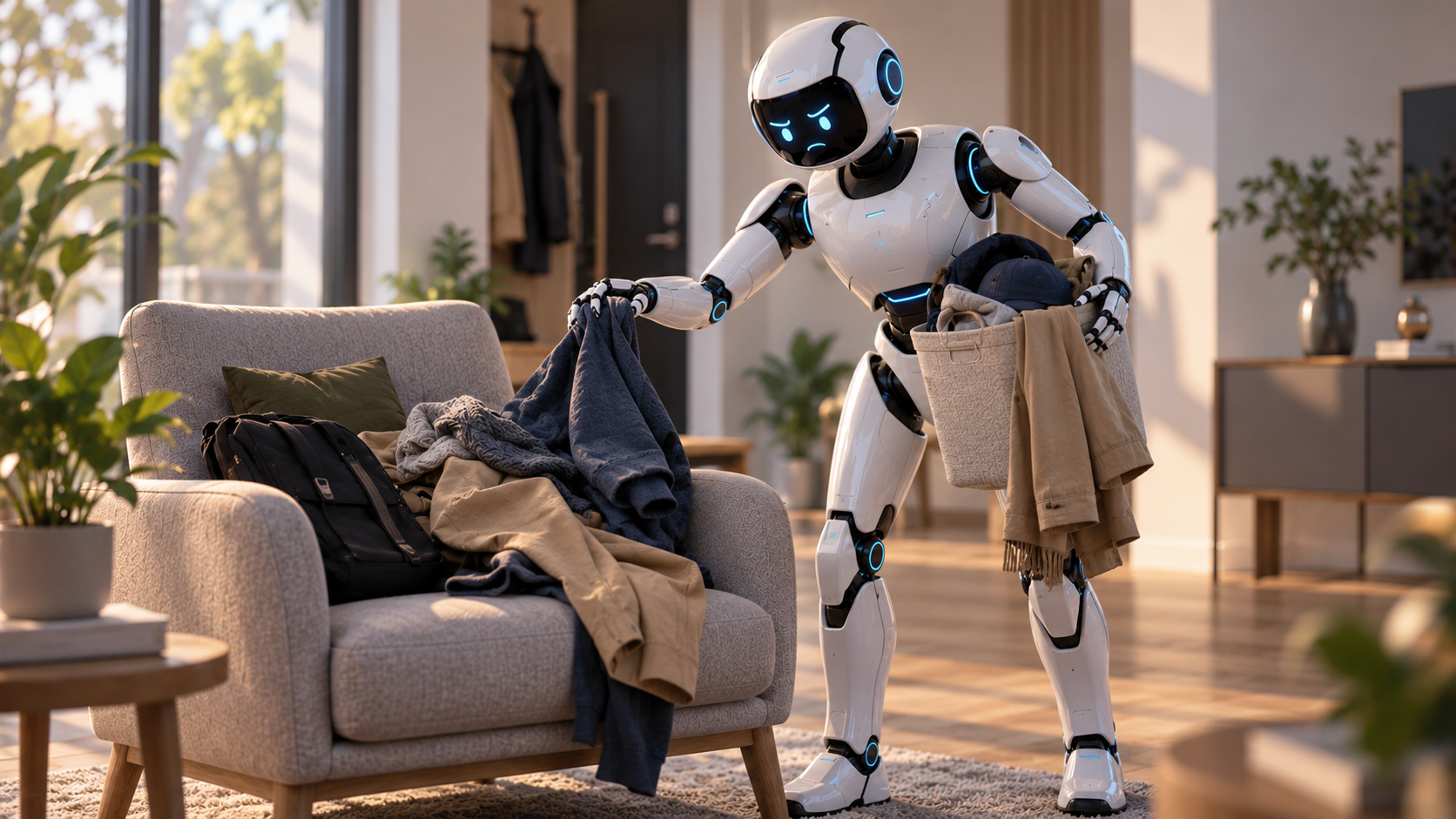
Smart home robots bring physical execution to domestic automation. Unlike voice-only assistants, these mobile platforms combine conversational intelligence with spatial awareness to manage smart home ecosystems and handle physical chores.
Key features and current usage scenarios for such devices:
- Communication with people. Smart robots are designed specifically for everyday social interaction with humans: they can communicate verbally, recognize faces, emotions, and gestures, conduct dialogues with contextual understanding, and more.
- Personalized assistance. AI enables robotic assistants to learn repetitive tasks, recognize their owners' habits and preferences, adaptively plan their schedules, predict behavior, and create personalized recommendations.
- Smart home control. Home robots are increasingly serving as mobile control centers for smart home systems. Integrating with various IoT devices, they continuously monitor their operation, control them (including by voice), detect faults, and optimize energy consumption. This integration relies on interoperability standards and networking protocols (such as Matter and Thread), allowing robotic assistants to seamlessly interact with devices from different manufacturers.
- Security. AI robots can function as autonomous security guards. They monitor data from CCTV cameras and security systems, alert you to intrusions, monitor pets, and send alerts to their owners.
- Automating complex household tasks. While classic robotic vacuum cleaners and lawn mowers have already become widespread, a new generation of humanoid and two-armed robots are undergoing extensive testing for complex household tasks. In lab and pilot settings, they are already being trained to sort laundry, assist with meal preparation, organize shopping, and move objects around the home.
Final Thoughts
Embodied artificial intelligence bridges the gap between digital reasoning and physical execution. As AI-powered robots gain autonomy and environmental adaptability, their integration into supply chains, commercial spaces, and households will define the next era of industrial and personal automation.