Effective inventory management helps businesses maintain optimal stock levels, avoid unnecessary expenses, and respond promptly to partner and customer orders. This is especially important for retail and e-commerce companies. To streamline operations and improve performance, businesses rely on specialized inventory management tools. In this article, we'll discuss the capabilities they offer and present the 5 best inventory management software for 2026.
What Are Inventory Management Tools
Inventory management software (IMS) is a program designed to monitor, control, and optimize a company's stock. It enables companies to track and manage their supplies of raw materials, finished goods, work-in-progress (WIP) inventory, and maintenance, repair, and operation (MRO) materials.
Today, businesses use such solutions to perform a wide range of tasks. Key among them are inventory control, order management, demand forecasting, and warehouse automation.
Maintaining optimal stock levels
The primary objective of an IMS is to ensure that a company always has sufficient stock to meet customer demand, as well as raw materials for timely production. These solutions help businesses maintain a balance of resources, preventing shortages that lead to supply chain disruptions, and excessive accumulation that limits working capital.
Reducing operating expenses
Using inventory management systems, companies can control the costs of storing, processing, and transporting raw materials and products. They help reduce warehouse costs, optimize purchasing and replenishment, and reduce the amount of raw material waste, obsolete stock, and damaged goods.
Improving demand forecasting
Many inventory management tools for business include analytics features. These can be used to analyze sales data for past weeks, months, and years, as well as forecast future demand for specific products. This allows companies to more effectively plan purchases, adjust production volumes, and more quickly adapt to seasonal fluctuations in demand.
Improving the quality of order fulfillment
Accurate inventory control using IMS tools allows companies to deliver products to customers faster and ensure they are physically available in warehouses and stores when orders are filled. This increases customer satisfaction and drives revenue and profit growth.
Supply chain optimization
Inventory management systems ensure seamless communication and coordination between all supply chain participants, including suppliers, warehouses, distribution centers, and both offline and online stores. By synchronizing these systems, companies improve the efficiency of logistics processes and minimize delivery disruptions or delays.
Zoho Inventory
Source: zoho.com
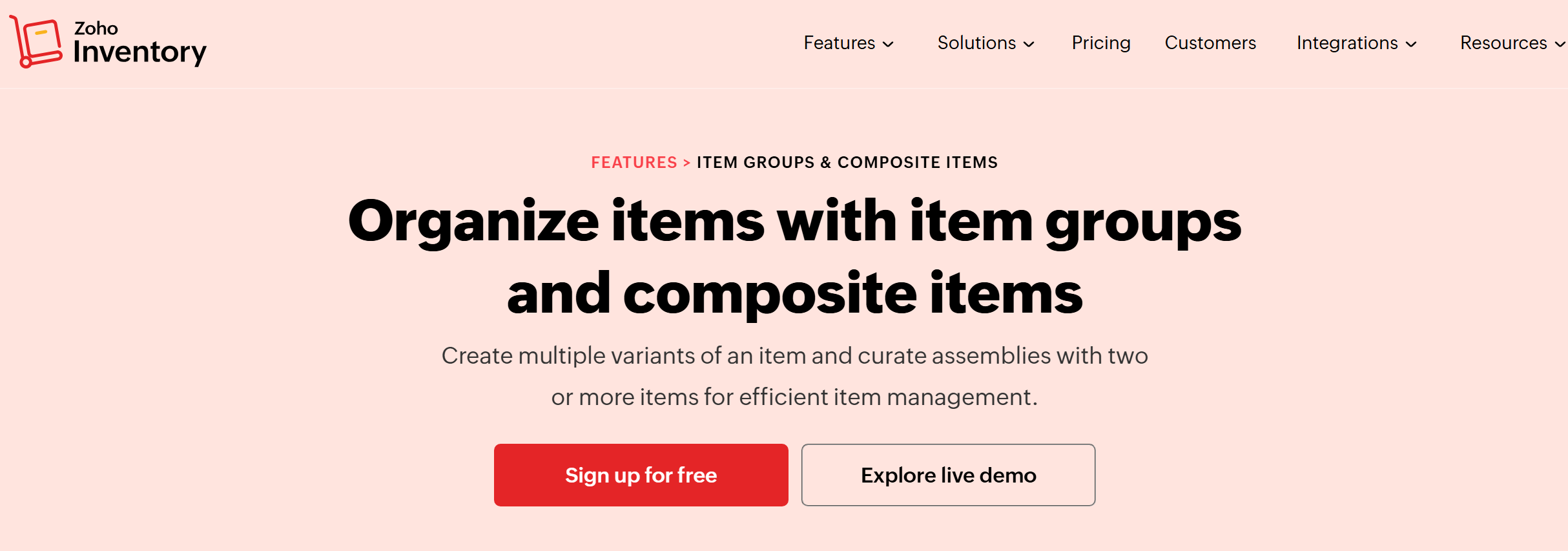
Zoho Inventory is a cloud-based solution for companies that need to effectively manage stock, warehouse operations, and order fulfillment. This inventory management software for e-commerce combines tools for stock control, multi-warehouse operations, workflow automation, and data synchronization with e-commerce platforms and accounting systems.
Key features:
- Business users receive a centralized database of all products and resources. Here, they can add, track, and manage various types of product information (price, quantity, warehouse and store availability, SKUs, margins, etc.).
- The platform allows you to manage product groups, kits, and sets, track items and batches by serial numbers, maintain warehouse transaction logs, create separate price lists for different clients or sales channels, generate SKUs and inventory reports, and more.
- Zoho Inventory allows you to track, manage, transfer, and perform other operations with stock (products, raw materials, etc.) manually or automatically across multiple warehouses through a single dashboard.
- Using the platform, entrepreneurs can manage the entire order cycle, from placing an order to order fulfillment and delivery. They can also manage pricing, taxes and fees, returns and refunds, generate invoices, and more.
- The system integrates with popular e-commerce platforms, including Amazon, eBay, Etsy, and Shopify. This helps businesses centrally manage orders and automatically update inventory across all sales channels.
- The platform supports native workflow automation tools and generates a range of reports (on inventory valuation, movement, sales, procurement, etc.). Its native integration with Zoho Analytics provides advanced business analytics capabilities.
Zoho Inventory offers four pricing plans:
- Standard (500 orders, 3 users, 2 locations, composite products, dropshipping, product groups, customer portal, etc.) — $39 per month for 1 company.
- Premium (all Standard features + 3,000 orders, 5 users, 4 locations, serial number tracking, batch tracking, supplier portal, etc.) — $99 per month per company.
- Plus (all Premium features + 7,500 orders, 10 users, 6 locations, Online Store Builder, Zoho Commerce, WhatsApp Commerce, loyalty and coupon management, etc.) — $159 per month for 1 company.
- Enterprise (all Plus features + 15,000 orders, 10 users, 10 locations, Zoho Analytics integration, multi-currency transactions, etc.) — $299 per month per company.
Odoo Inventory
Source: odoo.com
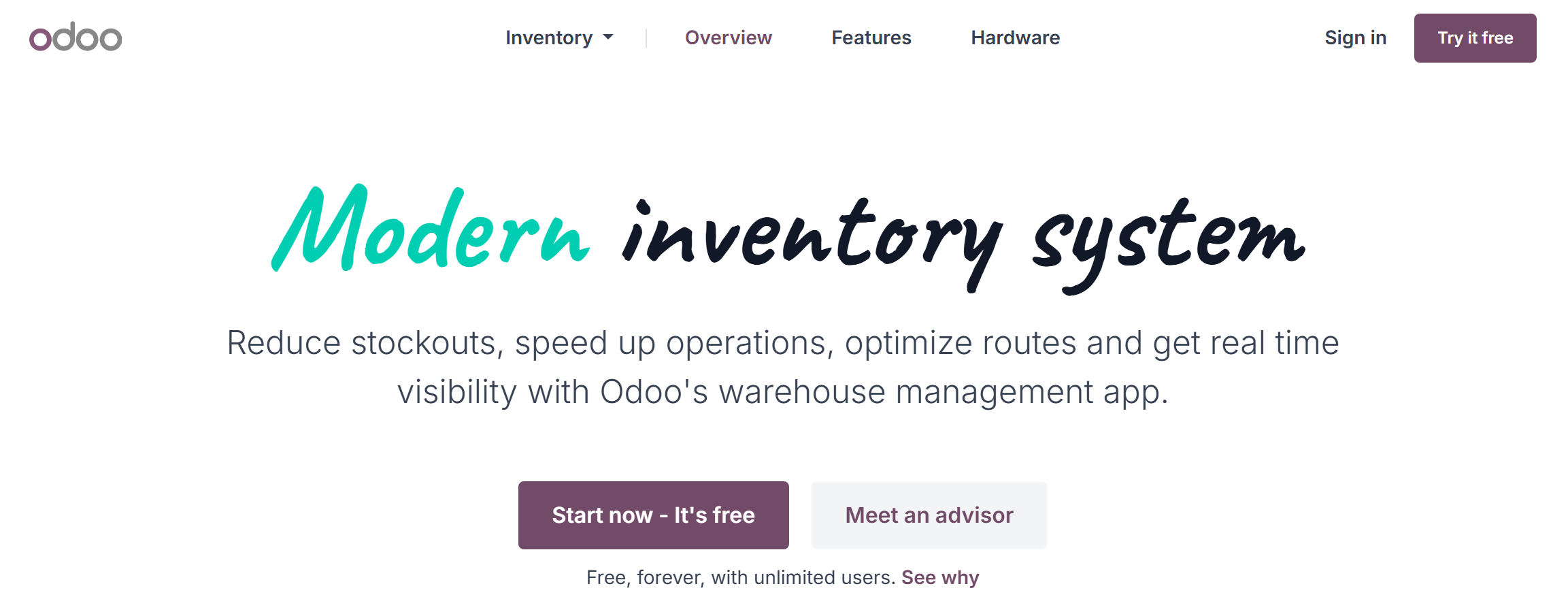
Odoo Inventory is stock tracking software within the Odoo ERP platform. It helps businesses effectively track inventory and manage warehouses, syncing these processes with sales, marketing, production, and finance.
Key features:
- The module provides comprehensive real-time monitoring of inventory in warehouses, stores, and other storage locations. It tracks incoming and outgoing deliveries, as well as available, reserved, and forecasted stock.
- Searching items by serial or lot numbers helps you find the right products faster, while real-time updates ensure data from sales, procurement, warehouses, and points of sale is up-to-date.
- Odoo automates inventory replenishment processes when stock levels are low. It features automatic creation of purchase orders for raw materials and other resources, demand forecasting for inventory planning, and integration with the purchasing module.
- The system supports barcode scanning upon receipt, delivery, or movement of goods, provides a mobile application for warehouse personnel, and automatically updates product data upon scanning.
- Built-in analytics tools help forecast stock levels, track inventory movement and turnover, evaluate management effectiveness, and conduct historical analysis. Customizable reports and KPIs are available.
To access Odoo Inventory functionality, users must subscribe to Odoo ERP and choose one of three pricing plans:
- One App Free (1 app, unlimited users, Odoo Online) — free.
- Standard (all applications, Odoo Online) — $31.10 per month per user.
- Custom (all apps, Odoo Online / Odoo.sh, Odoo Studio, multiple companies can be connected, API) — $61.10 per month per user.
Cin7
Source: cin7.com
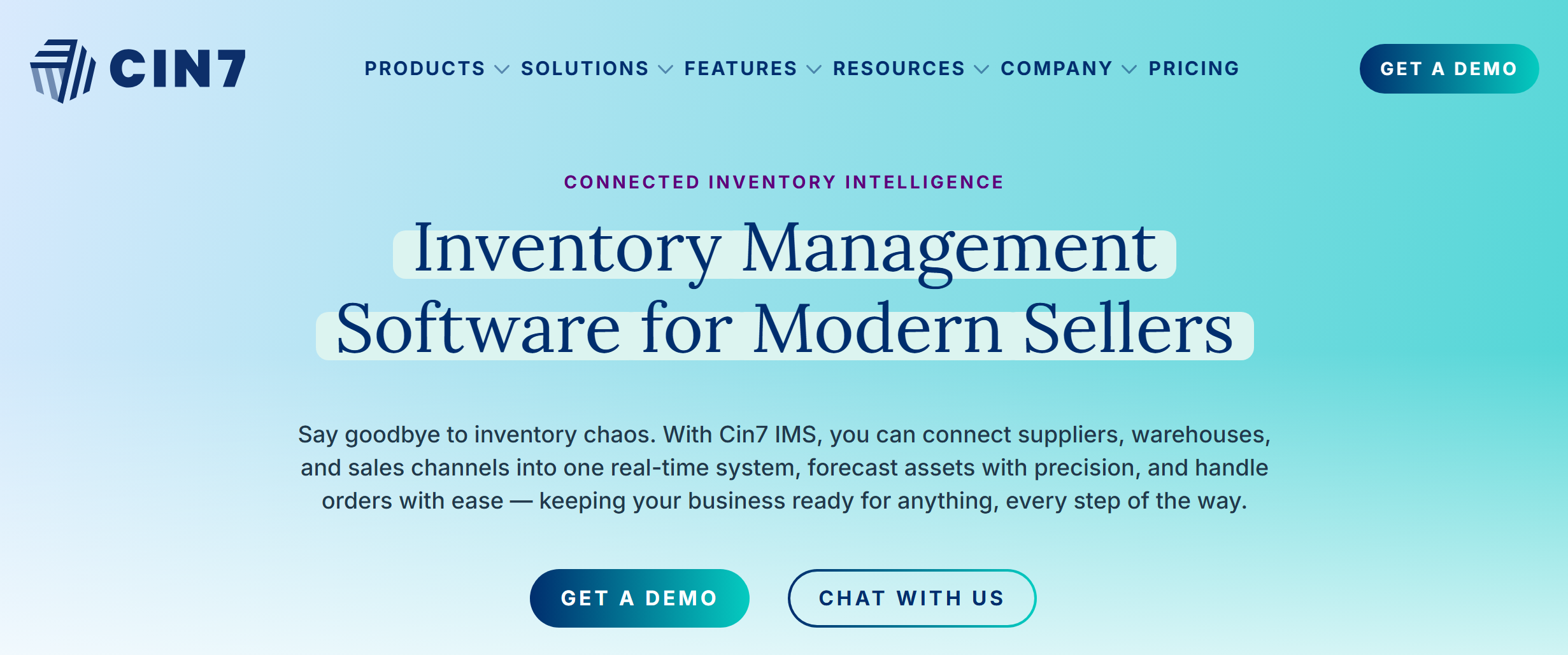
Cin7 is a cloud-based inventory management system designed for a wide range of product-based businesses, including manufacturers, wholesalers, and retailers.
Key features:
- The platform helps track inventory and manage its movement. It supports real-time data updates in warehouses, stores, and other points of sale, and provides a centralized product database with flexible filtering by parameters (color, size, etc.).
- Cin7 integrates with a range of sales channels, including e-commerce platforms (Shopify, Amazon, etc.), retail POS systems, B2B platforms, and marketplaces, automatically synchronizing inventory data.
- An integrated warehouse management system (WMS) allows you to monitor inventory locations down to the storage cells, automates picking and packing processes, supports barcode scanning, manages order fulfillment, and moves inventory between warehouses.
- Using the platform, companies can optimize procurement processes by tracking and managing information on suppliers, orders, and incoming inventory. They also receive automatic alerts about low stock.
- Built-in AI models can automate product demand forecasting (seasonal and otherwise), based on historical data and current trends.
- The system ensures complete coordination of the order lifecycle, from receipt to delivery. It handles order processing, workflow automation, shipment and delivery tracking, returns management, and a range of other operations.
Cin7 offers four tariff plans:
- Standard (5 users, 2 integrations with e-commerce systems and applications, up to 6,000 orders per year, unlimited inventory locations) — $349/month.
- Pro (10 users, 4 integrations with e-commerce systems and applications, up to 24,000 orders per year, material cost planning) — $599/month.
- Advanced (15 users, 6 integrations with e-commerce systems and applications, up to 120,000 orders per year, advanced warehouse management) — $1,999/month.
- Omni (8 users, 5 integrations with e-commerce platforms and apps, flexible order volume, extensive customization options) — pricing available upon request.
inFlow Inventory
Source: inflowinventory.com
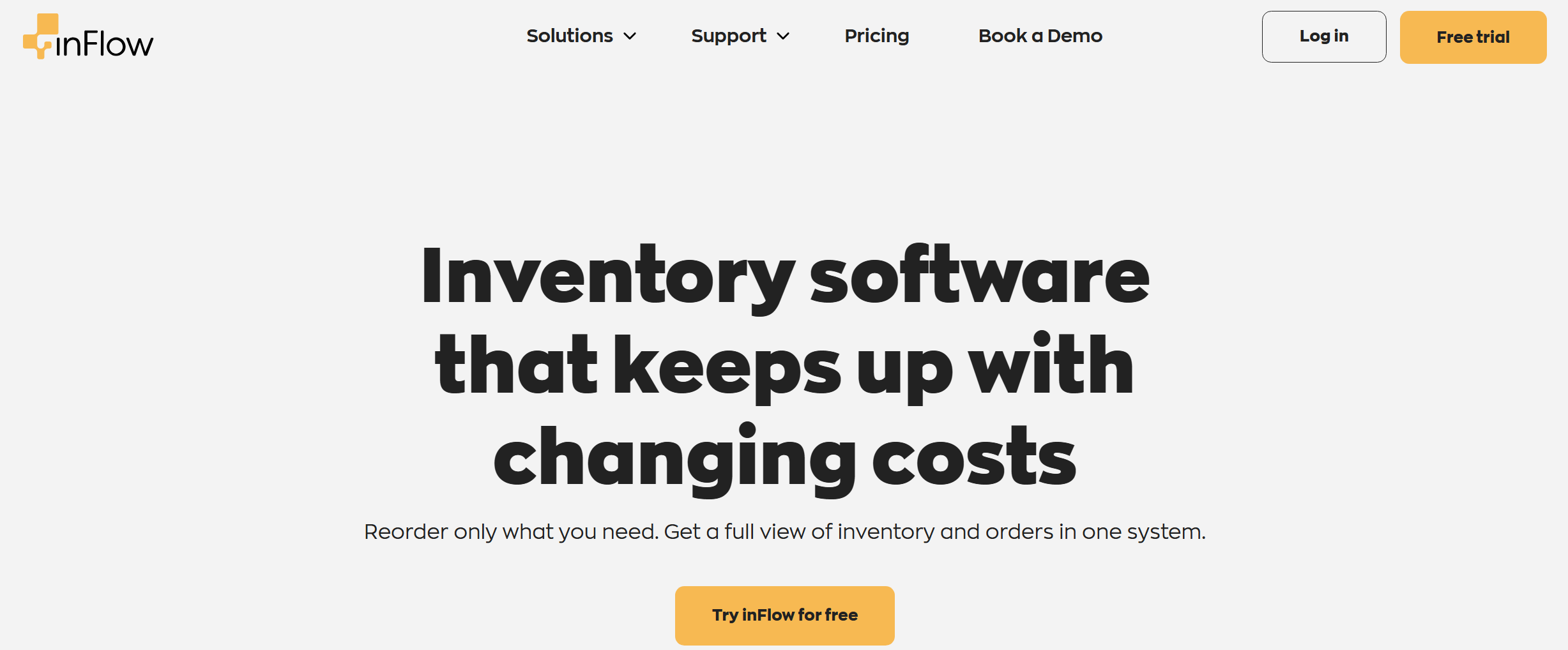
inFlow Inventory is a popular inventory management software designed for small and medium-sized product-based businesses. This solution's primary users are manufacturers, wholesale suppliers, retailers, and e-commerce companies.
Key features:
- The platform helps companies track inventory levels and product availability in warehouses and stores in real time. It provides a centralized database of raw materials, available and reserved products, and detailed information about them (SKUs, dimensions, images, etc.).
- inFlow enables businesses to effectively manage both incoming purchase orders and outgoing sales orders. It supports order creation and modification, order status monitoring, invoice and quote generation, revenue monitoring, and other metrics.
- The platform allows you to automate the creation of labels with barcodes or QR codes, customize label designs using a drag-and-drop editor, scan products using scanners or smartphones, and print labels using a printer.
- Through a single dashboard, users can manage stock across multiple locations, move goods between warehouses, track specific shelves and bins, perform stock counts and audits, and more.
- The system supports native integrations with a number of business systems, including e-commerce platforms (Shopify, WooCommerce), accounting systems (QuickBooks Online, Xero), logistics services, transport companies, EDI, and other services.
inFlow offers four pricing plans:
- Entrepreneur (2 members, 100 orders/month, 1 integration, 1 location, standard tech support) — $161 per month.
- Small Business (5 members, 1000 orders/month, 3 integrations, unlimited locations, access management, showroom) — $436 per month.
- Mid-Size (10 members, unlimited orders and locations, 5 integrations, API, extended support and access management) — $874 per month.
- Enterprise (25 members, unlimited orders, locations and integrations, serial numbers, etc.) — price upon request.
Fishbowl Inventory
Source: fishbowlinventory.com
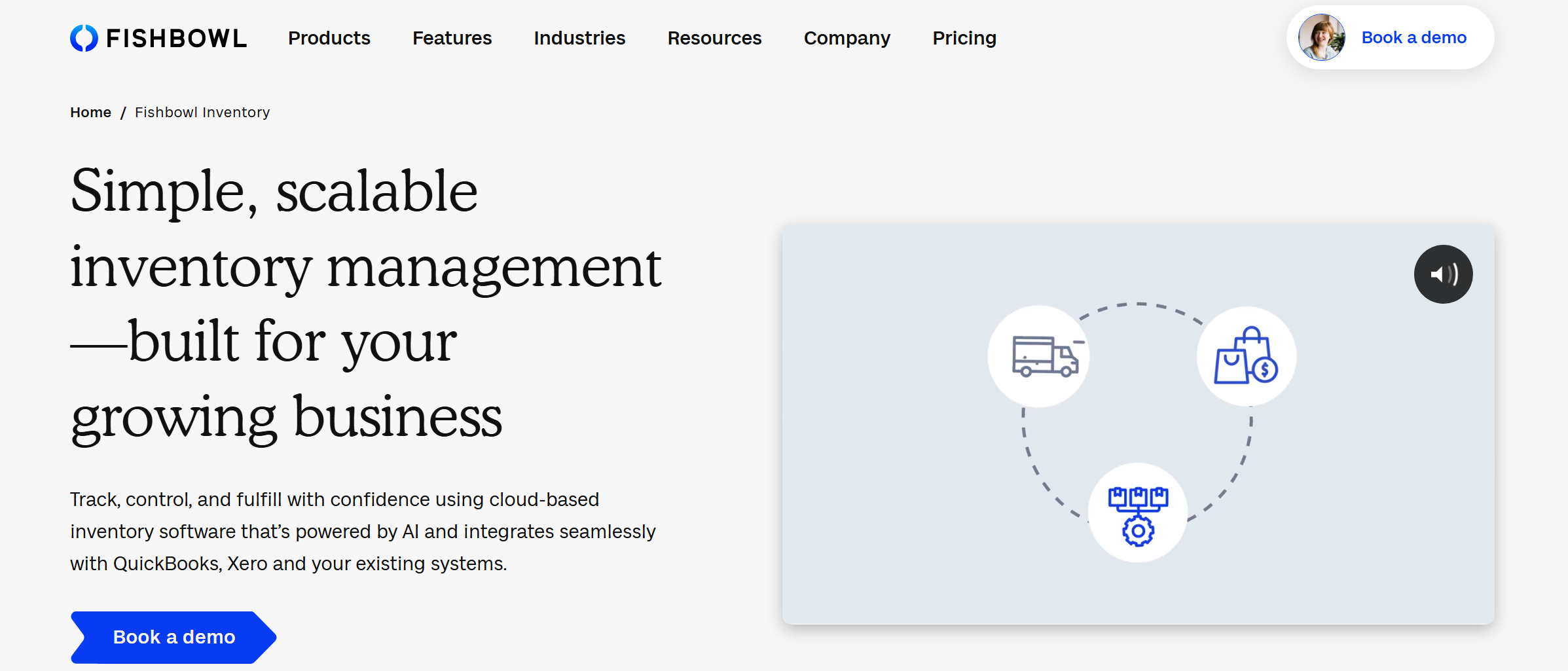
Fishbowl Inventory rounds out our review of the best inventory software for 2026. Like other platforms, it offers specialized solutions for product-based businesses to optimize a wide range of inventory and warehouse operations.
Key features:
- The system provides comprehensive monitoring and management of all types of enterprise stock and assets. Real-time data updates, barcode tracking, serial number and batch number tracking, and more are available.
- Users can flexibly manage warehouses, overseeing packaging, shipping, and product picking processes. The platform coordinates order fulfillment, inventory transfers between warehouses, and supports 3PL and dropshipping operations.
- Fishbowl automatically synchronizes inventory and sales management processes, providing real-time inventory updates and accelerated sales and purchase order processing.
- The platform enables automation of inventory replenishment processes and supplier relationship management, creation and tracking of purchase orders, coordination of inventory acceptance and reconciliation, and more.
- Built-in reporting and analytics tools allow you to generate customizable inventory and sales reports, quickly analyze data through dashboards, monitor production efficiency, and perform cost and profitability analysis.
Fishbowl Inventory offers three pricing plans:
- Essentials (2 users, inventory tracking, product and SKU management, etc.) — $229 per month (billed annually).
- Growth (5 users, support for core order fulfillment processes, delivery tools, AI reporting, etc.) — $429 per month (billed annually).
- Scale (10 users, advanced access control, inventory forecasting, advanced AI options) — $729 per month (billed annually).
Conclusions
The warehouse inventory software featured in our review provides product-based companies with comprehensive support for optimizing and automating stock monitoring and processing. These solutions offer not only basic inventory management tools but also advanced capabilities for analytics, workflow automation, and integration with other systems.
When choosing the right platform, consider not only functionality but also terms of use. Flexible pricing plans allow you to tailor a solution to your current business needs. Some services offer free versions or trial periods to evaluate their capabilities.
Note: Pricing, plans, features, and usage limits may change over time. Check each provider’s official website for the latest information before choosing a plan.
Read more on our blog:
- Professional Presentation Tools and Slide Deck Builders
- Future of Work: How Automation Is Changing Job Roles and Skills
- 5 Best Heatmap Tools for Website Conversion Optimization
- TikTok and Google Contacts Integration: Automate Lead Collection
- Google Lead Form Ads to MeisterTask: Step-by-Step Integration Guide